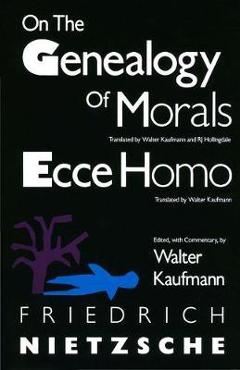
The great philosopher's major work on ethics, along with Ecce Homo, Nietzche's remarkable review of his life and works. On the Genealogy of Morals (1887) shows him using philsophy, psychology, and classical philology in an effort to give new direction to an ancient discipline. The work consists of three essays. The first contrasts master morality and slave morality and indicates how the term good has widely different meanings in each. The second inquiry deals with guilt and the bad conscience; the third with ascetic ideals--not only in religion but also in the academy. Ecce Homo, written in 1898 and first published posthumously in 1908, is Nietzsche's review of his life and works. It contains chapters on all the books he himself published. His interpretations are as fascinating as they are invaluable. Nothing Nietzsche wrote is more stunning stylistically or as a human document. Walter Kaufmann's masterful translations are faithful of the word and spirit of Nietzsche, and his running footnote commentaries on both books are more comprehensive than those in his other Nietzsche translations because these tow works have been so widely misunderstood. The great philosopher's major work on ethics, along with Ecce Homo, Nietzche's remarkable review of his life and works. On the Genealogy of Morals (1887) shows him using philsophy, psychology, and classical philology in an effort to give new direction to an ancient discipline. The work consists of three essays. The first contrasts master morality and slave morality and indicates how the term good has widely different meanings in each. The second inquiry deals with guilt and the bad conscience; the third with ascetic ideals--not only in religion but also in the academy. Ecce Homo, written in 1898 and first published posthumously in 1908, is Nietzsche's review of his life and works. It contains chapters on all the books he himself published. His interpretations are as fascinating as they are invaluable. Nothing Nietzsche wrote is more stunning stylistically or as a human document. Walter Kaufmann's masterful translations are faithful of the word and spirit of Nietzsche, and his running footnote commentaries on both books are more comprehensive than those in his other Nietzsche translations because these tow works have been so widely misunderstood. The great philosopher's major work on ethics, along with Ecce Homo, Nietzche's remarkable review of his life and works. On the Genealogy
Friedrich Nietzsche (1844-1900) was born near Leipzig in 1844. When he was only twenty-four he was appointed to the chair of classical philology at Basel University. Works published in the 1880s include The Gay Science , Thus Spoke Zarathustra , Beyond Good and Evil , On the Genealogy of Morals , Tw
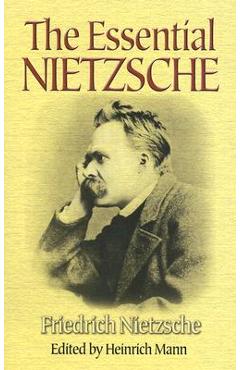
A prominent intellectual of the Weimar era, Heinrich Mann was a leading authority on Nietzsche. This volume consists of Mann's selections of highlights from the philosopher's works, along with an introduction that explains their significance to modern readers. Key excerpts from Nietzsche's books inc