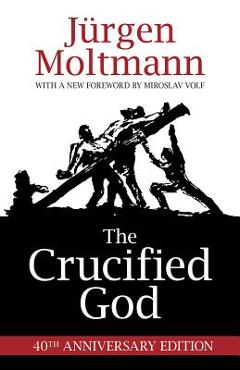
From its English publication in 1973, Jrgen Moltmanns The Crucified God garnered much attention, and it has become one of the seminal texts of twentieth-century theology. Following up on his groundbreaking Theology of Hope , The Crucified God established the cross as the foundation for Christian hope. Moltmanns dramatic innovation was to see the cross not as a problem of theodicy but instead as an act of ultimate solidarity between God and humanity. In this, he drew on liberation theology, and he was among the first to bring third-world theologies into a first-world context. Moltmann proposes that suffering is not a problem to be solved but instead that suffering is an aspect of Gods very being: God is love, and love invariably involves suffering. In this view, the crucifixion of Jesus is an event that affects the entirety of the Trinity, showing that The Crucified God is more than an arresting titleit is a theological breakthrough.
Thou shalt not suffer a witch to live may be one of the most frequently quoted verses against the budding community of a group that calls themselves Christian witches. But what if there was more to the verse than meets the eye? In the age of deconstruction and new methods of discovering one's person