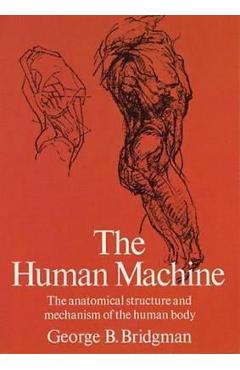
What is the difference between art anatomy and Bridgman's concept of the human machine? The human machine is the body as not only a fixed framework but also as a complex work of art which moves and was designed to move. In over 400 drawings, George B. Bridgman demonstrates the machine through the presentations which made him a gifted lecturer and teacher in his nearly fifty years at the Art Students League in New York and which gave life to drawings by his many students during those years. All skeletal and muscular systems are fully identified, and all are shown in front, back, and side views. The Human Machine begins with the framework of bones. In each section (head, neck, hand, arm, forearm, elbow, trunk, shoulder, back, scapular region, pelvis, hip, thigh, leg, knee, foot, and toe as well as the combinations of the major sections working together), George Bridgman starts with the skeletal components of the system; then he adds the muscles, shows the changes in the muscles as the body moves and, finally, shows the appearance of the bodily section in action. At the title implies, Bridgman, throughout, supplements his anatomical work with comparative drawings of simple machines. The anatomical approach to figure drawing is the foundation for the study of human form, and as in his other books on figure drawing, Bridgman's Life Drawing and The Book of a Hundred Hands, Bridgman's approach to the subject is important and unique. The Human Machine will give students and serious artists the conception of the human structure as the complex of beautiful machines it is, and will show how bone and muscle structures are solely responsible for our movements and for the shapes which we, at various times, display.
AI--including Generative AI--is radically transforming business. Are you ready? Accenture technology leaders Paul Daugherty and Jim Wilson provide crucial insights and advice to meet the challenge. Look around you. Artificial intelligence is no longer just a futuristic notion. It's here right now--i
MEGHAN O'GIEBLYN is the author of the essay collection Interior States , which was published to wide acclaim and won the Believer Book Award for Nonfiction. Her writing has received three Pushcart Prizes and appeared in The Best American Essays anthology. She writes essays and features for Harper's
Garry Kasparov's 1997 chess match against the IBM supercomputer Deep Blue was a watershed moment in the history of technology. It was the dawn of a new era in artificial intelligence: a machine capable of beating the reigning human champion at this most cerebral game. That moment was more than a cen
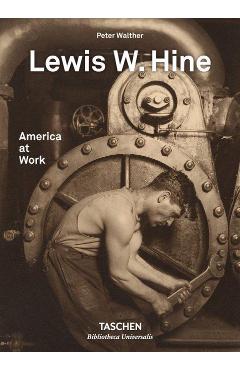
Photographer, teacher, and sociologist Lewis W. Hine (1874-1940) shaped our consciousness of American working life in the early 20th century like no other. Combining his training as an educator with his humanist concerns, Hine was one of the earliest photographers to use the camera as a documentary