Prețul și informațiile pot fi diferite la magazin. Comanda, plata și livrarea se fac direct la magazin.
Link afiliat: Gizmoo poate primi un comision.
Descriere
A compact and accessible history, from punch cards and calculators to UNIVAC and ENIAC, the personal computer, Silicon Valley, and the Internet. The history of computing could be told as the story of hardware and software, or the story of the Internet, or the story of "smart" hand-held devices, with subplots involving IBM, Microsoft, Apple, Facebook, and Twitter. In this concise and accessible account of the invention and development of digital technology, computer historian Paul Ceruzzi offers a broader and more useful perspective. He identifies four major threads that run throughout all of computing's technological development: digitization-the coding of information, computation, and control in binary form, ones and zeros; the convergence of multiple streams of techniques, devices, and machines, yielding more than the sum of their parts; the steady advance of electronic technology, as characterized famously by "Moore's Law"; and the human-machine interface. Ceruzzi guides us through computing history, telling how a Bell Labs mathematician coined the word "digital" in 1942 (to describe a high-speed method of calculating used in anti-aircraft devices), and recounting the development of the punch card (for use in the 1890 U.S. Census). He describes the ENIAC, built for scientific and military applications; the UNIVAC, the first general purpose computer; and ARPANET, the Internet's precursor. Ceruzzi's account traces the world-changing evolution of the computer from a room-size ensemble of machinery to a "minicomputer" to a desktop computer to a pocket-sized smart phone. He describes the development of the silicon chip, which could store ever-increasing amounts of data and enabled ever-decreasing device size. He visits that hotbed of innovation, Silicon Valley, and brings the story up to the present with the Internet, the World Wide Web, and social networking.
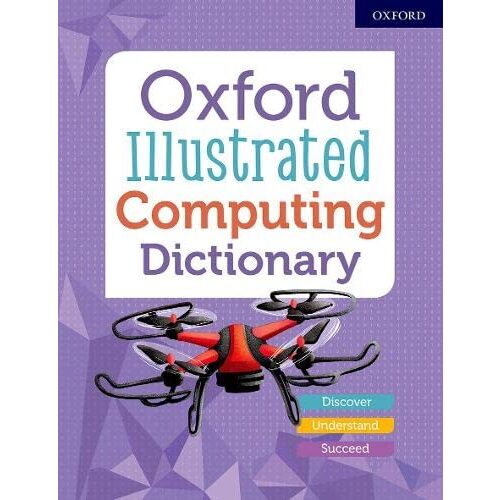
An easy-to-use illustrated dictionary that includes over 1000 words and meanings to help young learners understand key computing terms and concepts, essential for working with text and data, image edi...
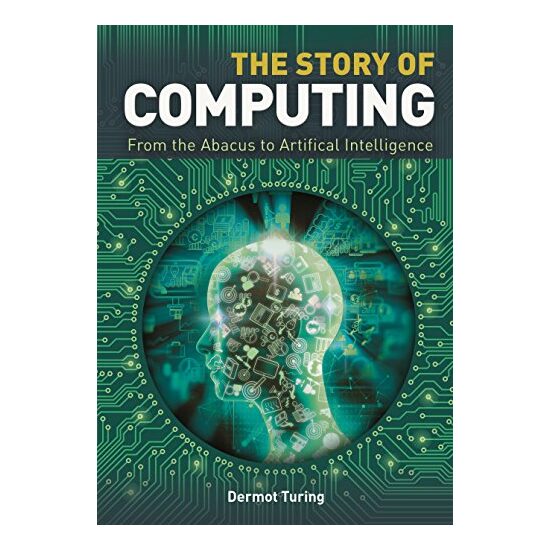
This is a history of computing from its earliest days, when individual mathematicians worked as 'computers' making calculations for their rulers, to the ubiquitous pocket-sized devices of the modern day. Subjects range from Babbage's difference engine to the creation of the Colossus in the codebreak
Cellular Nonlinear/neural Network (CNN) technology is both a revolutionary concept and an experimentally proven new computing paradigm. Analogic cellular computers based on CNNs are set to change the ...
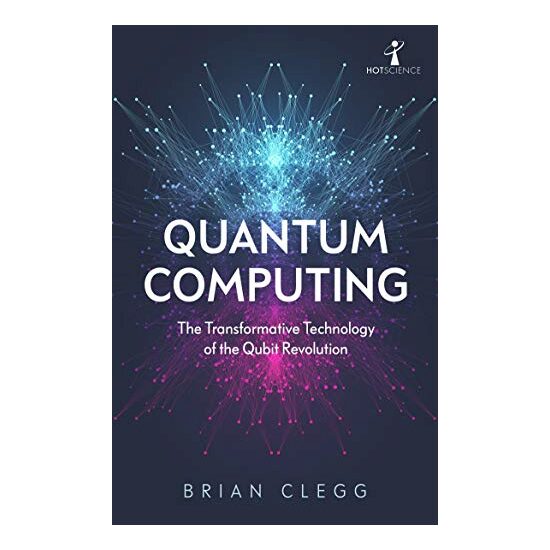
The ultimate non-technical guide to the fast-developing world of quantum computing. Computer technology has improved exponentially over the last 50 years. But the headroom for bigger and better electronic solutions is running out. Our best hope is to engage the power of quantum physics.