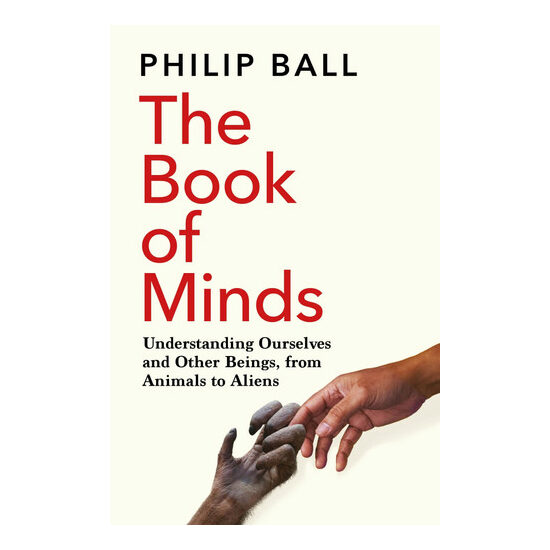
Understanding the human mind and how it relates to the world that we experience has challenged philosophers for centuries. How then do we even begin to think about 'minds' that are not human? Science now has plenty to say about the properties of mind. In recent decades, the mind - both human and otherwise - has been explored by scientists in fields ranging from zoology to astrobiology, computer science to neuroscience. Taking a uniquely broad view of minds and where they might be found - including in plants, aliens, and God - Philip Ball pulls these multidisciplinary pieces together to explore what sorts of minds we might expect to find in the universe. In so doing, he offers for the first time a unified way of thinking about what minds are and what they can do, arguing that in order to understand our own minds and imagine those of others, we need to move on from considering the human mind as a standard against which all others should be measured, and to think about the 'space of possible minds'. By identifying and mapping out properties of mind without prioritizing the human, Ball sheds new light on a host of fascinating questions. What moral rights should we afford animals, and can we understand their thoughts? Should we worry that AI is going to take over society? If there are intelligent aliens out there, how could we communicate with them? Should we? Understanding the space of possible minds also reveals ways of making advances in understanding some of the most challenging questions in contemporary science: What is thought? What is consciousness? And what (if anything) is free will? The more we learn about the minds of other creatures, from octopuses to chimpanzees, and to imagine the potential minds of computers and alien intelligences, the greater the perspective...
Prize-winning science writer Philip Ball explores the diversity of thinking minds, from the variety of human minds to those of mammals, insects, computers and plants, in a book that brilliantly illuminates how many different ways there are to think and engage with the world; and how unique are our o
Philip Ball79,50 lei
Este posibil ca informațiile să nu mai fie actuale.
Popular science writer Philip Ball explores a range of sciences to map our answers to a huge, philosophically rich question: How do we even begin to think about minds that are not human? Sciences from zoology to astrobiology, computer science to neuroscience, are seeking to understand minds in their
Philip Ball145,08 lei
Este posibil ca informațiile să nu mai fie actuale.