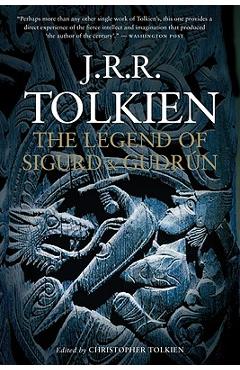
This previously unpublished work by J.R.R. Tolkien, written during the 1920s and 1930s, makes available the author's extensive retelling in English narrative verse of the epic Norse tales of Sigurd the Volsung and The Fall of the Niflungs. Many years ago, J.R.R. Tolkien composed his own version of the great legend of Northern antiquity, recounted here in The Legend of Sigurd and Gudr n . In the Lay of the V lsungs is told the ancestry of the great hero Sigurd, the slayer of F fnir, most celebrated of dragons; of his awakening of the Valkyrie Brynhild, who slept surrounded by a wall of fire, and of their betrothal; and of his coming to the court of the great princes who were named the Niflungs (or Nibelungs), with whom he entered into blood-brotherhood. In scenes of dramatic intensity, of confusion of identity, thwarted passion, jealousy, and bitter strife, the tragedy of Sigurd and Brynhild, of Gunnar the Niflung and Gudr n his sister, mounts to its end in the murder of Sigurd, the suicide of Brynhild, and the despair of Gudr n. The Lay of Gudr n recounts her fate after the death of Sigurd, her marriage against her will to the mighty Atli, ruler of the Huns (the Attila of history), his murder of her brothers, and her hideous revenge.
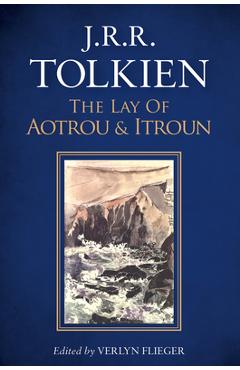
In Britain's land beyond the seas The wind blows ever through the trees; in Britain's land beyond the waves are stony shores and stony caves. So begins The Lay of Aotrou and Itroun, an early but seminal work that grew, along with the two Corrigan poems presented alongside it in this volume , from a
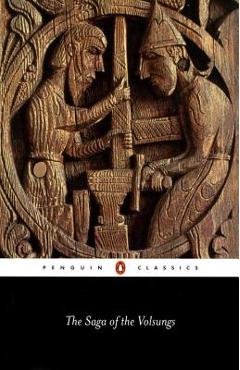
One of the great books of world literature--an unforgettable tale of jealousy, unrequited love, greed, and vengeance. Based on Viking Age poems and composed in thirteenth-century Iceland, The Saga of the Volsungs combines mythology, legend, and sheer human drama in telling of the heroic deeds of Sig