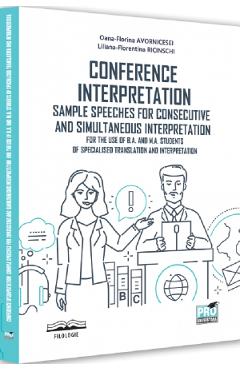
Conference interpretation. Sample speeches for consecutive and simultaneous interpretation for the Use of B.A. and M.A. students of specialised translation and interpretation This book is a collection of speeches meant to be used as a basis for practical activities during the applied sessions of conference interpretation, both in consecutive (with and without notes) and simultaneous modes, which the undergraduate students of the B.A. Programme for Translation and Interpretation (STI) study and practice during their fourth to sixth semesters, and which the graduate students of the Master's Programme for Specialised Translation and Interpretation (MATIS) at the Faculty of Engineering in Foreign Languages of the Technical University of Civil Engineering Bucharest study and practice during all four semesters, according to the curriculum. There are thirty-six chapters in the book. The text for each speech is preceded by an introduction which gives information about the provenance of the text, its domain and topic, it describes its style, suggests appropriate types of activities suitable for it, and provides directions to sources of (often extensive) further reading at the end of the book. Perhaps the most important role of the introductions to each chapter is to give suggestions of activities the texts can be used for, based on their style, topic, vocabulary, and length. We recommend reading these introductions, whether the activities are part of self-study or work at class. The texts can be used as a basis for a variety of activities. These range from preliminary ones, which are typically used during the early stages of acquiring interpretation skills, such as sight translation, memory exercises and consecutive without notes, include consecutive interpretation with notes, when the trainees learn the note-taking technique, and extend into the practice of simultaneous skills. These, in turn, range from beginner-level ones, such as narrative speeches with easy sentence structure, accessible vocabulary, familiar topics and relatively short duration, to increasingly longer ones, with sophisticated discourse, more mature topics (such as politics, as in Chapter XXV), more complex syntax and, indeed, even humour(!) (such as the last Chapter XXXVI), which is the bane of any interpreter's existence, as the trainees will no doubt find out.
Conference Interpretation. Speeches for Practical Activities of Consecutive and Simultaneous Interpretation for the Use of B.A. Students of Specialized Translation and Interpretation This volume comprises a collection of speeches written by the third-year undergraduate students of the B.A. Programme
A practical course for simultaneous interpretation: Sample Speeches and Practical Activities for the Use of Second-Year M.A. Students in Specialised Translation and Interpretation. This book is a collection of speeches and exercises meant to be used as a basis for practical activities during the app
BASIC BIBLE INTERPRETATION Can the Bible really be understood? Are Old Testament prophecies relevant for today? How can I understand the symbolism of the Book of Revelation? What is the relationship of the Old Testament to the New Testament? Why study Bible interpretation? Dr. Roy Zuck points out th
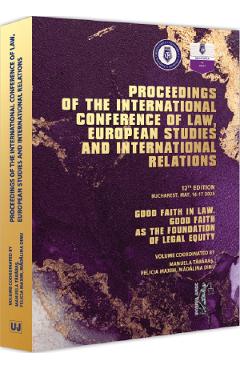
Good Faith in Law. Good Faith as the Foundation of Legal Equity. Proceedings of the international conference of law, european studies and international relations. 12th edition, Bucharest, 16-17 May 2024 Starting from the Kantian categorical imperative, act only according to that maxim whereby you ca